Why Tropical Fruit Distributors Keep Passing on Caimito — and How to Change That
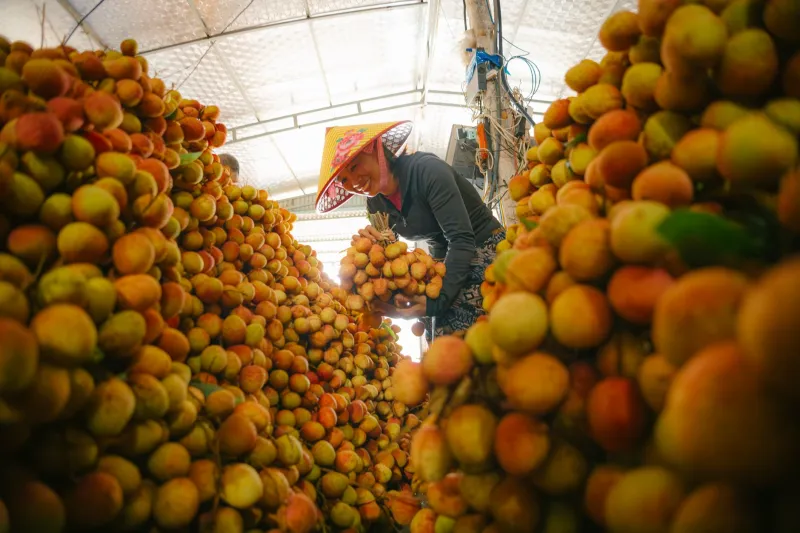
If you've ever called up a specialty produce distributor, rattled off a list of tropical fruits, and watched star apple get met with silence or a vague "we can look into it," you're not alone. Caimito sits in a frustrating middle ground: too niche for most mainstream distributors, but somehow still overlooked by the specialty players who theoretically exist to handle exactly this kind of fruit. So what's actually going on?
We talked to importers, regional distributors, and sourcing pros across the US to get a clearer picture. What came back wasn't a single smoking gun — it was a stack of overlapping barriers that, together, make star apple a surprisingly hard sell even for people who make their living moving unusual produce.
The Volume Problem Nobody Wants to Admit
Here's the core issue that almost every distributor we spoke with circled back to: caimito doesn't move in the quantities that justify the effort.
A produce distributor in South Florida — who asked not to be named because he still works with several Caribbean import partners — put it bluntly: "We need to know a fruit is going to turn over fast enough to justify the cold storage, the handling, the logistics. Star apple? The demand is there, but it's scattered. It's not concentrated enough in one retail channel for us to build a reliable program around it."
That scattershot demand is real. Caimito has passionate fans across Caribbean, Latin American, and Southeast Asian communities in the US, but those communities are spread across Miami, New York, Houston, LA, and beyond. Without a single dense retail hub pulling consistent volume, distributors struggle to make the numbers work.
Shelf Life Is a Genuine Dealbreaker
Anyone who's handled fresh star apples knows they're not exactly forgiving. Ripe caimito bruises easily, doesn't hold up well under refrigeration for extended periods, and can turn from perfect to unsellable faster than most tropical fruits. For a distributor managing a warehouse operation with multiple handoffs between origin and retail, that's a serious liability.
"We've tried it twice," said one importer who sources from the Dominican Republic and Haiti. "Both times we had spoilage issues by the time the fruit reached our retail accounts. It wasn't a sourcing problem — the fruit was fine when it left the farm. It's the transit and handling chain that kills it."
This isn't an insurmountable problem — controlled atmosphere shipping and better post-harvest handling can extend viability — but those solutions require investment, and most distributors aren't going to make that investment until demand justifies it. Classic chicken-and-egg.
The Certification and Import Documentation Maze
Fresh fruit crossing into the US from the Caribbean or Central America doesn't just hop on a plane. USDA APHIS permits, phytosanitary certificates, and country-specific import protocols all apply — and for a fruit that isn't moving in huge commercial volumes, the paperwork-to-profit ratio can feel punishing.
Some source countries have smoothed out the regulatory pathway for star apple imports over the years, but inconsistency remains. A shipment from one origin might clear without issue while a comparable load from a neighboring country gets flagged or held. For a distributor already stretched thin on margins, that unpredictability is enough to push caimito down the priority list.
Distributor Unfamiliarity Is More of a Factor Than You'd Think
This one surprised us a little, but it came up repeatedly: a lot of produce buyers at specialty distributors simply don't know the fruit well enough to sell it confidently.
Selling produce isn't just logistics — it involves pitching accounts, explaining ripeness cues, handling objections from retail buyers who've never stocked the item. If the distributor's own sales team doesn't know how to tell a ripe caimito from an unripe one, or can't explain to a grocery buyer why a customer would reach for it, the pitch falls flat before it starts.
"I had a rep from a distributor call me asking what a star apple even tastes like," said a chef in the Miami area who sources caimito directly for her restaurant. "If your own sales team doesn't know the product, how are they going to move it?"
So What Can You Actually Do?
If you're a restaurant buyer, retailer, or just someone who wants reliable access to fresh star apples, the situation isn't hopeless. It just requires a more proactive approach than placing a standard order.
Make formal requests — in writing. Most distributors track customer demand through their sales reps, but verbal requests get forgotten. Send an email. Use the "request a product" form if the distributor has one. A documented paper trail of requests from multiple accounts is actually useful data for a buyer trying to build a business case internally.
Aggregate demand with neighboring businesses. If you're a restaurant, talk to other restaurants in your area that might want caimito. A distributor is far more likely to take the leap if three or four accounts in the same city are asking simultaneously. Collective demand changes the math.
Identify direct importers, not just distributors. Several small importers in Florida, New York, and California bring in star apples directly from the Caribbean and sell to accounts without going through a traditional distribution layer. These operations are smaller and less predictable, but they're often more willing to work with you if you can commit to consistent volume.
Ask about frozen or processed options. Fresh caimito is the dream, but frozen star apple pulp is increasingly available from a handful of Caribbean and Latin American suppliers. It's not the same experience, but it's a workable entry point for chefs who want to experiment with the flavor profile without navigating fresh fruit logistics.
Connect with community networks. Caribbean community organizations, diaspora food networks, and even some specialty ethnic grocery stores have informal sourcing pipelines that predate the commercial distribution system entirely. These channels exist because mainstream distribution failed the community — and they can be surprisingly reliable for small-volume buyers willing to build relationships.
The Longer Game
None of this changes overnight. Distributors respond to sustained demand signals over time, not one-off requests. The more buyers, chefs, retailers, and consumers push consistently for star apple access, the harder it becomes for distributors to keep treating it as a fringe item.
The fruit itself is extraordinary — sweet, creamy, unlike anything else in the tropical category. The demand is real. The communities who grew up eating it are here, and they're not a small market. What's missing is the infrastructure to connect supply to that demand reliably.
Building that infrastructure starts with pressure from the buyer side. Ask for it. Document it. Keep asking. That's how niche fruits eventually stop being niche.