What Happens When No One in the Store Actually Knows What They're Selling
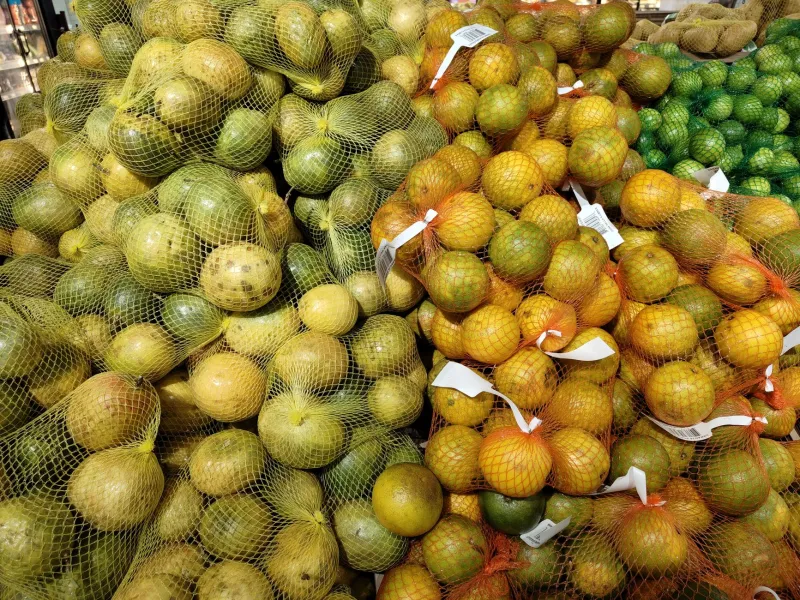
Imagine you're a curious shopper at a Whole Foods in Austin or a specialty grocer in Chicago. You spot something unfamiliar in the produce section — a smooth, purple or green orb sitting next to the dragon fruit and rambutan. There's no signage beyond a basic PLU sticker. You pick it up, squeeze it gently (too firm, as it turns out), put it back, and walk away. Nobody on the floor can tell you what it is, how to pick a ripe one, or what it tastes like.
That's the caimito problem in American retail, and it's more widespread than most people in the industry want to admit.
The Person Behind the Counter Often Doesn't Know Either
We reached out to produce managers at a handful of specialty and natural grocery chains across the US — some of whom asked not to be named — and the picture that emerged was pretty consistent: star apple lands on the shelf with almost zero accompanying education.
"We get a box, we put it out," one produce manager at a mid-sized natural food chain in the Southeast told us. "I personally didn't know what ripe even looked like the first time we stocked it. I guessed. I was wrong."
That's not an unusual story. Unlike bananas, where ripeness cues are practically universal knowledge, caimito operates on a completely different set of signals. A ripe star apple gives slightly to pressure — similar to a ripe avocado — and may develop a slight wrinkling of the skin. The color shift between unripe and ripe can be subtle depending on the variety. None of that is intuitive if you've never handled one before.
When staff can't answer basic customer questions, or worse, when they put out fruit that's nowhere near ripe, the ripple effect is real: returns, waste, and shoppers who tried it once, had a bad experience, and never came back.
Distributors Are Filling a Void — But Only Partway
Some specialty produce distributors who work with tropical fruits have started including basic handling sheets with their shipments. But "basic" is doing a lot of heavy lifting in that sentence.
A one-page insert that says "store at room temperature until soft" isn't going to cut it for a fruit most American produce staff have never touched. What's actually needed — according to distributors who have tried more robust education programs — is hands-on training, visual ripeness guides, and ideally, tasting opportunities for store employees.
"You can't sell what you haven't tasted," said one Florida-based tropical fruit distributor who supplies caimito to retailers in the Southeast and Mid-Atlantic. "When my sales reps do in-store demos and let the staff try it, the whole dynamic changes. Suddenly they're telling customers about it. They're excited. That enthusiasm is contagious."
The problem is that in-store demos cost money and time, and for a fruit that's still building its retail footprint in the US, not every distributor has the margin to invest in that kind of push. It's a chicken-and-egg situation: the fruit doesn't move because people don't know about it, and education programs don't get funded because the fruit doesn't move.
What Whole Foods — and Stores Like It — Get Wrong
High-end natural grocers like Whole Foods have a reputation for stocking adventurous produce. And to their credit, star apple does appear in some locations, particularly in markets with large Caribbean or Latin American communities. But stocking a fruit and supporting a fruit are two very different things.
Signage at most stores where we spotted caimito ranged from nonexistent to a single sentence. Compare that to something like jackfruit, which has benefited from an explosion of recipe content, social media coverage, and even branded packaged products that have educated consumers over years. Star apple has none of that infrastructure behind it yet.
One grocery buyer we spoke with — who works for a regional chain with locations across the Mid-Atlantic — put it plainly: "We need our floor staff to be mini-experts on anything unusual we stock. If we can't get there with a product, it tends to quietly disappear from the set."
That's exactly what happens with caimito in a lot of stores. It shows up, confuses everyone, generates complaints about texture or flavor (often because it was sold unripe), and gets quietly dropped from the next order.
The Retailers Who Are Getting It Right
Not everyone is fumbling this. A small but growing number of retailers — often independent specialty grocers with strong ties to immigrant communities — have figured out that caimito sells when it's presented with context.
A Caribbean-focused market in South Florida we spoke with has been stocking star apple for over a decade. Their approach is simple but effective: handwritten signs in English and Spanish explaining what the fruit is, how to pick a ripe one, and a few serving suggestions. Staff are trained on the product during onboarding. And the store sources directly from growers they have relationships with, which means the fruit arrives in better condition than what comes through a generic distribution chain.
"Our customers know what this is," the owner told us. "But we also get people who have never seen it before, and they buy it because we make it approachable. That's the whole job."
Some forward-thinking distributors are also experimenting with QR codes on packaging that link to video content — ripeness guides, recipe ideas, storage tips. It's a low-cost solution that puts the education directly in the shopper's hands without requiring a trained staff member to be present for every sale.
Closing the Gap Takes More Than Good Intentions
The caimito knowledge gap isn't anyone's fault in particular. It's a structural problem that comes from trying to introduce a relatively niche tropical fruit into a retail system that wasn't built with it in mind.
But it is fixable. The ingredients are all there: distributors who understand the product, growers with deep expertise, and a growing community of caimito enthusiasts in the US who would love nothing more than to see this fruit succeed at retail.
What's missing is coordination. Distributors need to invest in education materials that actually get used. Retailers need to demand better onboarding for specialty produce, not just a PLU code and a prayer. And buyers need to treat star apple like the premium, high-potential product it is — not an afterthought shoved between the starfruit and the longan.
Because here's the thing: every shopper who picks up a caimito, gets a good one, and learns how to eat it properly becomes a repeat customer. The fruit sells itself once people actually know what they're dealing with. The gap isn't in the fruit. It's in the system around it.