Cold Chains, Big Bets, and a Fruit That's Finally Getting Its Due

Photo: Jonas Rogowski, CC BY-SA 3.0, via Wikimedia Commons
Something quiet has been happening in the wholesale produce world over the last couple of years. Buyers who once glossed over caimito on supplier lists are now asking questions — real ones, about volumes, lead times, and cold storage specs. Star apple, long treated as a niche curiosity in the US market, is starting to get serious attention from the kind of players who move product at scale.
So what changed? And what does it actually take to bring this notoriously fragile fruit to American consumers without it arriving as a bruised, shelf-expired mess?
From Afterthought to Line Item
For most of the past two decades, caimito occupied an awkward position in the specialty produce hierarchy. It was beloved in Caribbean and Southeast Asian immigrant communities, reliably sold at ethnic grocery stores in cities like Miami, New York, and Houston — but largely invisible to mainstream distributors. The fruit's short shelf life, sensitivity to temperature swings, and irregular harvest windows made it a logistical headache that most mid-sized importers simply didn't want to deal with.
That calculus is shifting. A combination of factors — rising consumer curiosity about unfamiliar tropical fruits, growing purchasing power among Caribbean diaspora communities, and the broader "exotic produce" trend that's been building since the early 2020s — has pushed caimito onto the radar of distributors who previously wouldn't have given it a second look.
Several wholesale buyers in the Florida and New York markets have started carving out dedicated SKUs for star apple in their tropical fruit programs. That might sound minor, but in the produce distribution world, getting a dedicated line item means someone is committing real money to sourcing consistency, not just placing opportunistic one-off orders.
The Cold Chain Problem — and Who's Solving It
Here's the thing about caimito that makes it genuinely difficult to scale: it doesn't travel like a mango. The skin bruises easily, the flesh oxidizes quickly once the fruit is handled roughly, and the optimal storage temperature window is narrow enough that a single warehouse mishap can wipe out an entire shipment's sellable value.
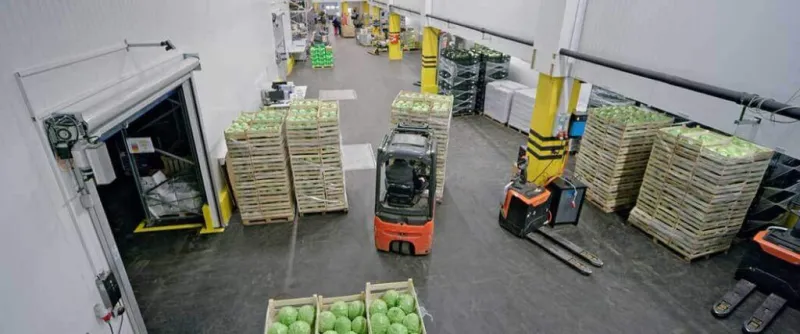
Building a reliable cold chain for star apple means investing in more than just refrigerated trucks. It means coordinating harvest timing with growers so fruit arrives at packing facilities at the right ripeness stage — not too green, not too far along. It means using ethylene-controlled storage rooms. It means training handlers who understand that caimito is not a pineapple and can't be treated like one.
Some importers operating out of Miami — the de facto gateway for Caribbean produce into the US — have started making exactly these kinds of investments. Purpose-built packing protocols for soft tropical fruits, faster customs clearance arrangements with Caribbean suppliers, and partnerships with cold storage facilities that have experience handling delicate exotics are all becoming part of the conversation.
This isn't cheap. Retrofitting logistics infrastructure for a fruit that previously moved in small, informal volumes requires upfront capital that not every importer can stomach. But those who are making the bet seem to believe the demand is real enough to justify it.
What This Means for Farmers in the Caribbean
For growers in places like Jamaica, Trinidad, and the Dominican Republic — where caimito has been cultivated for generations — this uptick in importer interest is a genuinely mixed signal.
On one hand, increased demand and better-organized distribution chains could mean more stable pricing and access to markets that were previously out of reach. Caribbean farmers who've been growing star apple primarily for local consumption or small-scale export are suddenly fielding calls from buyers who want volume commitments and year-round supply agreements.
On the other hand, scaling up to meet those demands isn't simple. Caimito trees take years to mature and reach productive output. Farmers who want to expand their orchards are looking at a long runway before that investment pays off. And there's a real risk that if larger, better-capitalized operations in other tropical growing regions — parts of Southeast Asia, for instance — move faster to meet US importer demand, Caribbean growers could get squeezed out of a market that's culturally and historically theirs.
Smaller family farms are particularly vulnerable here. They often lack the post-harvest infrastructure — proper packing sheds, cooling facilities, reliable transport to port — that export buyers increasingly require. Without targeted support, the scaling of the US caimito market could end up concentrating benefits among a handful of larger agricultural operations while smaller growers get left behind.
Mid-Sized Distributors Caught in the Middle
There's another layer to this story that doesn't get talked about much: the mid-sized produce companies that built their businesses around specialty Caribbean fruits and now find themselves competing with larger players who are finally showing up to the table.
For years, these distributors operated in a relatively low-competition space. They knew their suppliers, they understood the product, and they served a loyal customer base of ethnic grocers and Caribbean restaurants. Now, with bigger importers sniffing around, they're facing pressure on both ends — suppliers who have more options and retail buyers who are suddenly getting pitched by multiple vendors.
Some of these mid-sized operators are doubling down on what makes them different: deeper grower relationships, more flexible order minimums, and product knowledge that a large-scale distributor simply can't replicate. Others are exploring whether there's room to partner with larger players rather than compete head-on.
Either way, the competitive landscape for caimito distribution in the US is more crowded than it's been in a long time — and it's only going to get more so.
The Bigger Picture
What's happening with caimito right now is a familiar pattern in the specialty produce world. A fruit that was once considered too niche, too fragile, or too unfamiliar for mainstream distribution starts gaining traction — slowly, then all at once. The infrastructure investment follows. The market expands. And everyone from farmers to importers to retailers starts recalibrating their assumptions.
The open question is whether this moment will be handled in a way that actually benefits the people who've been growing and eating star apple for generations, or whether it'll follow the pattern of other "discovered" tropical fruits where the commercial gains flow mostly upward while small producers scramble to keep up.
For now, the fact that serious money is starting to move in this direction is genuinely significant. Caimito has been waiting a long time for this kind of attention. Whether the industry gets the execution right is a different question entirely.