Fewer Fruits, Higher Prices: How Climate Shifts Are Squeezing Star Apple Supply
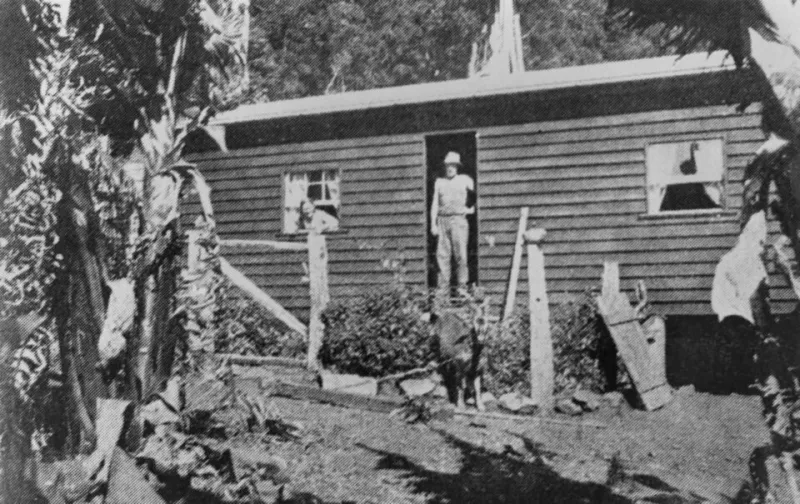
Photo: State Library of Queensland, Australia, No restrictions, via Wikimedia Commons
If you've noticed star apples getting harder to find — or more expensive when you do find them — you're not imagining it. Growers across the Caribbean and South Florida have been quietly dealing with a compounding problem for several years now: the weather just isn't cooperating the way it used to.
Caimito (Chrysophyllum cainito) has always been a finicky fruit. It needs a specific rhythm of wet and dry seasons to flower and set fruit properly. Mess with that rhythm, and the whole cycle gets thrown off. And right now, that rhythm is getting messed with pretty consistently.
What's Actually Changing on the Ground
Talk to farmers in Puerto Rico, the Dominican Republic, or Miami-Dade County, and you start hearing the same themes. Dry seasons that stretch longer than expected. Rainfall that arrives in sudden, heavy bursts instead of steady, predictable patterns. Temperatures that spike during what should be cooler months.
For star apple trees, timing is everything. Flowering typically happens in response to a dry period followed by rain — essentially, the tree needs environmental stress to trigger blooming. When dry spells drag on too long, trees get damaged rather than triggered. When the rain finally comes, it often arrives too hard and too fast, which can cause fruit drop and increase the risk of fungal disease.
In South Florida, growers are also dealing with saltwater intrusion in low-lying areas, a slow-moving consequence of sea level rise that's been creeping into agricultural land for years. Caimito trees aren't especially salt-tolerant, so fields that were productive a decade ago are now struggling or have been abandoned entirely.
In the Dominican Republic — historically one of the stronger sources for caimito destined for the US market — farmers have reported increasingly inconsistent harvests since the early 2020s. Some years are fine. Others see yields drop by 30 to 40 percent with little warning. That kind of unpredictability makes it nearly impossible to plan supply chains, and it's part of why US importers have had such a hard time maintaining consistent stock.
The Flowering Problem Nobody Talks About
One of the more underreported issues is what's happening to star apple flowering cycles specifically. Caimito trees in the Caribbean typically produce fruit once a year, with harvest falling somewhere between February and April depending on location. That window has been shifting.
In some growing areas, trees are flowering earlier — then getting hit by an unexpected cold snap or a late dry spell that kills off blossoms before they can develop. In other areas, flowering is being delayed or split across multiple partial cycles, which sounds like it might spread out the harvest but actually just produces smaller quantities at irregular intervals. Neither outcome is great for anyone trying to build a reliable distribution pipeline.
For specialty distributors and importers who depend on predictable seasonal windows, this is a real operational headache. You can't build a market for a fruit if you can't tell buyers when it's going to show up.
How Farmers Are Pushing Back
The good news is that growers aren't just watching this happen. There's genuine experimentation going on, and some of it is showing real promise.
Microclimate farming and shade management is one approach gaining traction. By strategically planting windbreaks and shade trees around caimito orchards, some growers are creating slightly more stable microclimates that buffer against temperature extremes and reduce moisture evaporation during dry spells. It's not a complete fix, but it helps.
Drip irrigation systems are being adopted more widely, particularly in South Florida and parts of Puerto Rico where water access is more controlled. Rather than depending entirely on rainfall, growers can supplement during dry stretches — and more importantly, they can time irrigation to simulate the natural wet-dry triggers that caimito trees need to flower. It's essentially trying to recreate the conditions the climate used to provide naturally.
Grafted variety selection is another front where progress is happening. Researchers and experienced growers have been identifying individual star apple trees that seem to perform better under stress conditions — staying productive through longer dry spells, recovering faster after heavy rain events. Propagating those trees through grafting is a slow process, but it's how the next generation of more resilient caimito stock gets built.
Elevation and site relocation is also coming into play. In the Dominican Republic and Haiti, some farmers are moving new plantings to slightly higher elevations where temperatures are marginally cooler and rainfall patterns have remained somewhat more stable. It's not an option for everyone, but for growers who have access to hillside land, it's a practical hedge.
What This Means for US Buyers
For consumers and food businesses sourcing caimito in the US, the near-term picture is honestly a bit uncertain. Supply is likely to remain inconsistent for at least the next several years while adaptive strategies catch up with changing conditions. That means prices will probably stay elevated and seasonal availability will continue to be less predictable than buyers would like.
The 5-to-10-year outlook is harder to call. If grafting programs and improved irrigation adoption accelerate, there's a real possibility that production stabilizes or even grows in some regions. Puerto Rico in particular has been investing in tropical fruit agriculture as part of broader food sovereignty efforts, and caimito is on the radar as a high-value crop worth developing.
On the other hand, if climate trends continue at their current pace without sufficient adaptation investment, some traditional growing areas may simply become less viable for caimito production. That would likely push more sourcing toward countries like Colombia and Jamaica, which have their own climate challenges but different risk profiles.
The Bigger Picture for Specialty Tropical Fruit
Caimito isn't the only tropical fruit facing this kind of pressure. Mangosteen, sapodilla, and mamey sapote growers are dealing with versions of the same story. What makes star apple particularly vulnerable is that it was already operating with thin commercial margins and limited distribution infrastructure before climate stress entered the equation. There wasn't a lot of slack in the system to absorb the extra pressure.
For anyone who loves caimito — or who's been trying to build a business around it — that's a sobering reality. The fruit that's already hard to find is getting harder to grow reliably.
But farmers are resilient, and the adaptive work happening right now in Puerto Rico, South Florida, and the Dominican Republic is genuine. The question is whether it moves fast enough to keep pace with what the climate is throwing at these orchards. We'll be watching closely — and talking to the growers doing the hard work of figuring it out.