Stocked on the Shelf, Absent from the Story: The Media Blind Spot Around Star Apple
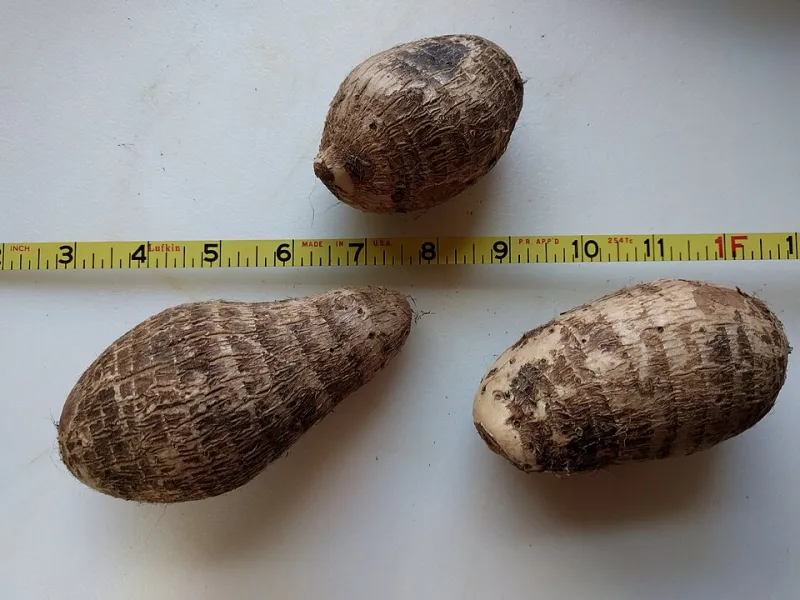
Photo: RoySmith, CC BY-SA 4.0, via Wikimedia Commons
There's a fruit sitting in a crate at your nearest Caribbean grocery right now. It's round, it's gorgeous — deep purple or pale green depending on the variety — and when you slice it open, the cross-section looks like something out of a botanical illustration. Vendors in Miami's Little Havana have been selling it for decades. Families from Jamaica, Trinidad, Puerto Rico, and the Dominican Republic know exactly what to do with it. And yet, if you open any major American food magazine or scroll through the most-followed food media sites in the country, caimito — the star apple — is essentially a ghost.
This is the paradox we keep running into here at Caimito Fruits. The fruit exists. The community around it thrives. The supply chain, however imperfect, is functional. And still, the mainstream food narrative has almost nothing to say about it. We wanted to understand why — so we started asking around.
The Grocery Store Reality
Spend an afternoon talking to produce managers at specialty grocers in cities with large Caribbean and Latino populations, and a clear picture emerges. In neighborhoods across the Bronx, Hialeah, and the Houston metro area, caimito moves steadily through the store. It's not a novelty item tucked into a corner display. It's a regular part of the rotation.
"We've been carrying it for as long as I can remember," says one produce manager at a Caribbean market in South Florida who asked not to be named. "My customers know what it is. They don't need a label explaining it. The challenge is that everyone outside this neighborhood has no idea it exists."
That last part is the crux of it. Caimito has a deeply loyal customer base — it just happens to be a base that mainstream food media has historically underserved, overlooked, or simply failed to reach.
Why Food Writers Aren't Writing About It
We reached out to several food journalists and editors — some at major national outlets, others at regional publications — to ask a direct question: why isn't star apple showing up in your coverage?
The responses were candid, and a little uncomfortable.
Some editors acknowledged that their recipe development teams source ingredients primarily from what's available at large grocery chains in their area. If a fruit isn't at Whole Foods or a mainstream supermarket, it tends not to make the editorial calendar. One contributor at a well-known food magazine put it bluntly: "If I can't tell readers where to buy it, my editor won't greenlight the story."
Another food writer — who covers produce trends and has written extensively about dragon fruit, jackfruit, and rambutan — admitted she'd never actually tasted caimito. "I know the name," she said. "But it's never been pitched to me as a trend, and it hasn't crossed my path at the markets I cover."
That phrase — the markets I cover — says a lot. The infrastructure of American food media is still largely calibrated to mainstream retail. When a fruit lives primarily in immigrant-owned specialty stores, it exists outside the usual discovery loop: no PR push from a major distributor, no placement in a Whole Foods seasonal display, no celebrity chef posting about it on Instagram.
The Cultural Visibility Problem
There's a deeper layer here that several people we spoke to were willing to name directly: the fruits that get covered tend to reflect whose kitchens get covered.
Caribbean and Latin American food traditions have long been underrepresented in the flagship food publications that shape American culinary culture. That's changing — slowly, and with real momentum from a new generation of food writers — but the legacy of that gap doesn't disappear overnight. Caimito is, in many ways, a casualty of that history.
"It's not that star apple is unknown," says one food culture writer who focuses on Caribbean cuisine. "It's that the people who grew up with it haven't always been given the platform to write about it, and the people who have the platforms haven't always had access to the fruit or the communities that eat it."
This isn't a cynical observation — it's a structural one. And it helps explain why a fruit that's genuinely beloved across multiple diaspora communities can still feel invisible to a food editor in Manhattan or Los Angeles.
What Would Actually Change Things
So what would it take to shift the narrative? A few threads came up repeatedly in our conversations.
Better distribution reach. As long as caimito is difficult to source outside specialty stores, it's going to be a hard sell to editors who need their readers to be able to replicate a recipe. Expanding availability — even incrementally, into co-ops, farmers markets, or online delivery — creates more entry points for coverage.
More voices at the table. Food media is actively recruiting writers from Caribbean and Latin American backgrounds, and that matters. When the people writing about food have a personal relationship with star apple, the stories get written.
The trend machine. It sounds cynical, but the reality is that food media responds to momentum. Once a few high-profile chefs or food personalities start talking about caimito, the coverage tends to follow. That tipping point hasn't happened yet — but it feels closer than it did a few years ago.
Educational content that travels. Part of what keeps caimito on the margins is that most Americans genuinely don't know what it is, how to eat it, or what it tastes like. Content that answers those basic questions — in accessible, non-condescending language — is part of the bridge.
The Irony Hiding in Plain Sight
Here's what makes this whole situation a little absurd: star apple is, by almost any measure, exactly the kind of fruit food media loves to discover. It's visually striking. It has a fascinating cross-section. The flavor — a soft, sweet, milky richness with floral undertones — is genuinely distinctive. It has deep cultural roots and a compelling story. It checks every box.
The fruit isn't the problem. The infrastructure around how food stories get told is the problem.
At Caimito Fruits, we're obviously not neutral parties here — we're deeply invested in getting people to pay attention to this fruit. But we also think the disconnect between what's actually available in American cities and what gets written about in American food media is worth naming out loud. The caimito is already here. It's already feeding communities across this country. The coverage just hasn't caught up yet.
And honestly? That gap feels like an opportunity — for writers, for grocers, and for anyone who's curious enough to pick one up and taste it.