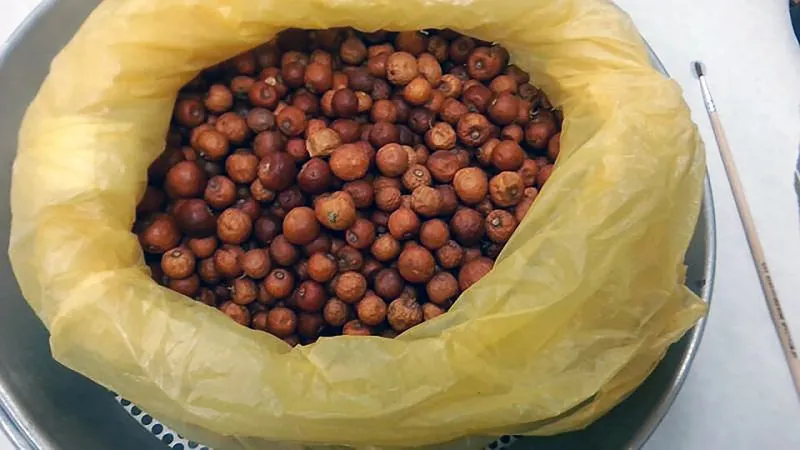
Inside the Black Box: How US Grocery Buyers Decide What Tropical Fruit Makes the Cut — and Why Caimito Keeps Getting Skipped
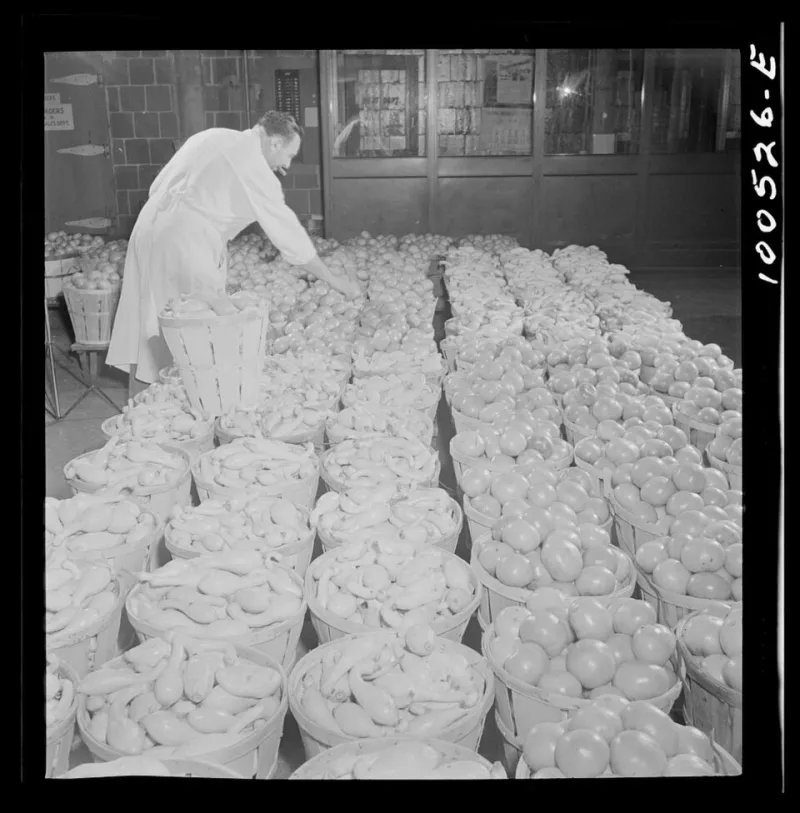
Photo: Marjory Collins, Public domain, via Wikimedia Commons
Walk into a Whole Foods, a Kroger, or even a well-stocked regional co-op, and you'll find dragon fruit stacked in neat pyramids, rambutan in clamshell containers, and jackfruit in what feels like seventeen different formats. What you almost certainly won't find is caimito — the creamy, milky-fleshed star apple that millions of people across the Caribbean, Central America, and Southeast Asia grew up eating.
This isn't an accident. And it isn't really about consumer demand either. It's about how the US grocery procurement machine actually works — and why that machine has some very specific blind spots when it comes to fruits like star apple.
The Category Manager Problem
At most major grocery chains, the decision about what ends up in the produce section starts with one person: the category manager. This is the person responsible for the entire "tropical and specialty fruit" portfolio. They're managing dozens of SKUs, negotiating with established vendors, and operating under a mandate to hit margin targets every single quarter.
For a fruit like caimito to even get a meeting, it typically needs to clear several informal hurdles first. Is there an existing vendor relationship that covers it? Is there reliable year-round supply? Has it been featured in a major trade publication? Does it have a UPC code that integrates cleanly into the store's inventory system?
Star apple struggles on almost every one of those counts. Supply is seasonal and geographically concentrated. The vendor landscape is fragmented — mostly small importers and regional Caribbean distributors who don't have the volume or infrastructure to service a national chain. And caimito has historically been absent from the trade press that category managers actually read.
The result: caimito doesn't get a pitch. And if it never gets a pitch, it never gets a trial. And if it never gets a trial, it never builds the sales history that would justify a permanent slot.
Procurement Committees and the Velocity Trap
Even when a category manager is personally interested in a fruit, they usually can't act alone. At chains above a certain size, new produce additions go through a procurement committee — a cross-functional group that includes buyers, logistics teams, finance, and sometimes marketing.
These committees are designed to reduce risk, and they do that job well. They also, almost by definition, favor the familiar. A fruit that's already selling at a competitor's store is a much easier sell internally than one that requires the committee to take a leap of faith.
Then there's the velocity problem. Grocery buyers live and die by velocity — how fast a product moves per store per week. A new tropical fruit introduction is almost always going to post weak velocity numbers at first, especially if it's placed in a part of the store where the customers who actually know and love it don't think to look.
Industry consultants who work with specialty produce distributors will tell you that this creates a self-fulfilling prophecy: caimito gets a trial in the wrong location, posts underwhelming numbers, gets pulled, and the category manager concludes that "there's no demand." Meanwhile, the Haitian family in the next town over is driving forty-five minutes to a Caribbean market because that's the only place they can find it.
The Vendor Relationship Gap
There's another structural issue that rarely gets discussed openly: the role of incumbent vendor relationships.
Major produce distributors — the ones who already have national distribution agreements with big chains — have very little incentive to add a difficult, perishable, low-volume fruit to their portfolio. Their business model is built on consistency and scale. Caimito is seasonal, bruises easily in transit, and requires handling knowledge that most conventional cold-chain operations simply don't have.
Smaller importers who do specialize in Caribbean and tropical fruit often lack the certifications, insurance requirements, and EDI (electronic data interchange) capabilities that large grocery chains require of their vendors. It's not that the fruit isn't available — it's that the pathway from the farm to the category manager's desk is full of structural friction that doesn't exist for, say, a new variety of mango from an established Mexican exporter.
What Would Actually Have to Change
So what would it actually take to get caimito onto the shelves of a mainstream US grocery chain? People working in the specialty produce space point to a few realistic levers.
Aggregation on the supply side. The fragmented importer landscape needs to consolidate, or at least coordinate. A handful of distributors who can collectively guarantee consistent volume, consistent quality, and consistent cold-chain handling would be far more compelling to a category manager than a dozen small operators pitching independently.
Demand signaling from the right communities. Grocery chains pay close attention to what's selling at ethnic and specialty retailers in their trade areas. When Caribbean markets in Miami, New York, and Houston consistently sell out of caimito, that's data. Chains with sophisticated market research teams are starting to pick up on these signals — but it's a slow process.
A champion inside the building. Almost every specialty fruit that's successfully crossed over into mainstream grocery had an internal advocate — someone on the buying team who had a personal connection to the fruit, or who had eaten it on a trip and became obsessed. Dragon fruit's US rise owes a surprising amount to a handful of category managers who encountered it in Vietnam or Thailand and came back determined to put it on shelves. Caimito needs more of those people.
Trade press and industry visibility. When Produce Business or The Packer runs a feature on an emerging fruit, category managers notice. Caimito has been almost entirely absent from that conversation. More coverage in the trade publications that buyers actually read would move the needle faster than almost anything else.
The Demand Is Already There — It's Just Not Being Counted
Perhaps the most frustrating part of this story is that the demand for star apple in the US isn't hypothetical. Caribbean-American communities, Filipino-American households, Vietnamese-American families — these are real, large, and economically significant consumer groups who already know and love caimito. They're currently buying it at specialty stores, importing it in luggage, or growing it in backyards in South Florida.
That demand is invisible to most grocery chains because it's flowing through channels that don't generate the kind of clean sales data that procurement committees respond to.
The caimito knowledge gap, in the end, isn't really about ignorance. It's about a system that only sees what it's already measuring. Until the fruit shows up in the metrics, it won't show up on the shelves. And until it shows up on the shelves, a lot of people are going to keep making that forty-five-minute drive.
Somebody has to break the cycle. The question is who moves first.