Suitcases Full of Caimito: Inside Florida's Underground Star Apple Trade
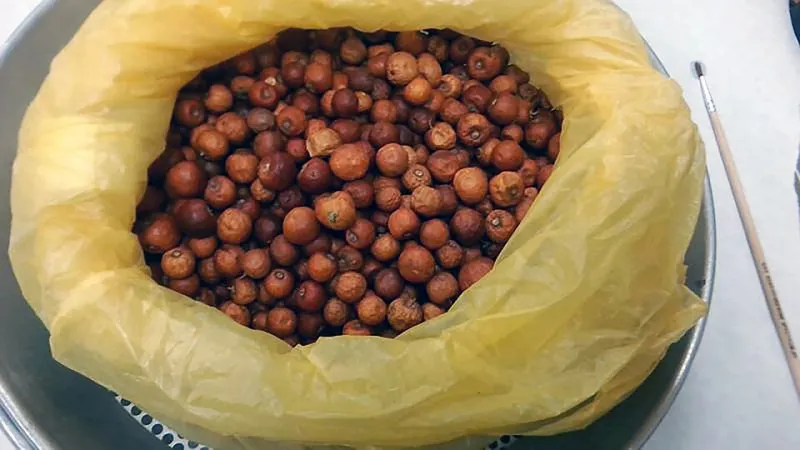
Photo: U.S. Customs and Border Protection, Public domain, via Wikimedia Commons
Every week, travelers landing at Miami International Airport quietly carry something they're not supposed to: fresh caimitos stuffed into checked luggage, wrapped in newspaper, and hidden beneath clothes. It's a small-scale smuggling operation born entirely out of desperation — and it reveals something much bigger about how broken America's tropical fruit import system really is.
You won't find this story in a press release. But spend enough time talking to Caribbean-American communities in South Florida, and it surfaces fast. People are taking real legal risks — potential fines, confiscation, even secondary screening — just to get their hands on a fruit that's been part of their food culture for generations.
So why is this happening? And what does it tell us about the state of tropical fruit commerce in the US?
What Customs Actually Says
The rules aren't ambiguous. Fresh fruits and vegetables from most Caribbean countries are either prohibited outright or require phytosanitary certification before entering the United States. The USDA's Animal and Plant Health Inspection Service (APHIS) enforces these regulations to prevent the introduction of agricultural pests — things like fruit flies, fungal spores, and invasive insects that could devastate domestic crops.
Star apple, or caimito, falls into a complicated gray zone depending on country of origin. Fruit from some Caribbean nations can be legally imported under specific conditions, but the certification process is expensive, the approved channels are limited, and the commercial infrastructure to support large-scale caimito imports simply doesn't exist yet.
Customs and Border Protection officers at Miami and Fort Lauderdale airports say they regularly intercept undeclared tropical fruits. "We see it constantly," one CBP agricultural specialist told us. "People don't think of it as smuggling. They think of it as bringing food from home. But the risk to US agriculture is real."
The fines for undeclared agricultural products start at $300 for first-time violations and can climb significantly higher. The fruit gets confiscated and destroyed regardless.
Why People Do It Anyway
Here's the honest truth: people keep doing it because there's no real alternative.
For Caribbean-American families in Florida, caimito isn't a novelty or a trendy superfood. It's a deeply personal fruit — tied to childhood memories, grandmothers' kitchens, and a flavor profile that genuinely doesn't exist anywhere else. The creamy, grape-like sweetness of a ripe purple caimito eaten fresh off the tree isn't something you can replicate with a substitute.
And right now, unless you happen to have a producing tree in your backyard or live near one of the very few specialty importers legally sourcing the fruit, you simply cannot buy a fresh caimito in most American cities.
"I know it's not allowed," one Haitian-American woman in Hialeah told us, asking to remain anonymous. "But my mother asks me every time I visit family in Port-au-Prince. She says bring some back. So I do. I put them in my clothes. I've never been caught. But I know I could be."
That sentence — I know I could be — captures the quiet desperation driving this underground trade. This isn't organized crime. It's grief, nostalgia, and a broken system failing real people.
The Regulatory Gap Nobody Wants to Talk About
The frustrating part for legitimate importers is that the regulations exist for good reason — and yet they've created a vacuum that's being filled in the worst possible way.
Several specialty fruit distributors we spoke with described a system that's effectively impossible to navigate for small-volume, highly perishable tropical fruits. The cost of obtaining phytosanitary certification, coordinating with approved fumigation facilities, and meeting cold-chain requirements makes commercial caimito imports economically unviable at anything below a fairly large scale.
"The regulations were designed for commodity crops," one Florida-based importer explained. "They weren't designed for a fruit that bruises if you look at it wrong, has a two-week shelf life at best, and has maybe three or four serious commercial suppliers in the entire Caribbean. The system just wasn't built for caimito."
That mismatch has real consequences. Legitimate distributors trying to build compliant supply chains find themselves undercut — not by commercial competitors, but by a steady trickle of suitcase imports that meet community demand without any of the overhead.
What Legitimate Distributors Are Actually Doing
A small but growing number of importers are pushing back — not against the smugglers themselves, but against the conditions that make smuggling feel necessary.
Some are working directly with APHIS to develop approved import protocols for caimito from specific Caribbean partners. Others are investing in domestic production — primarily in South Florida and Hawaii — to reduce dependence on international supply chains altogether. A few are partnering with Caribbean agricultural agencies to help farmers meet US certification standards, essentially building the infrastructure that should have existed decades ago.
It's slow work. Certification processes take years. Domestic caimito cultivation is still limited by the fruit's specific climate requirements and its notoriously difficult commercial harvest window. But the people doing it are committed, and the regulatory conversations are at least happening now in ways they weren't five years ago.
"We want to be the reason people don't have to hide fruit in their suitcase," one distributor told us. "That's genuinely the goal. Make it legal, make it accessible, make it affordable. Then the underground market goes away on its own."
The Bigger Picture
The caimito smuggling problem is a small story in the grand scheme of US agriculture policy. No congressional hearings are being called. No task forces are being assembled. But it's a remarkably clear window into a much larger failure: the inability of American food systems to accommodate the genuine culinary diversity of the people who live here.
Caribbean-Americans, Latin American immigrants, and tropical fruit enthusiasts aren't asking for special treatment. They're asking for a functioning legal pathway to access food that's culturally meaningful to them. When that pathway doesn't exist — when the regulations are too cumbersome, the supply chains too broken, and the commercial interest too low — people find workarounds. They always do.
The suitcases keep landing at MIA. The fruit keeps getting eaten at kitchen tables in Hialeah and Little Haiti and Homestead. And somewhere in a USDA office, a form that could fix this is sitting in a queue, waiting.
Until the system catches up, the underground trade will keep running — one carefully wrapped caimito at a time.