Backyard Winner, Commercial Loser: The Strange Double Life of the Star Apple Tree
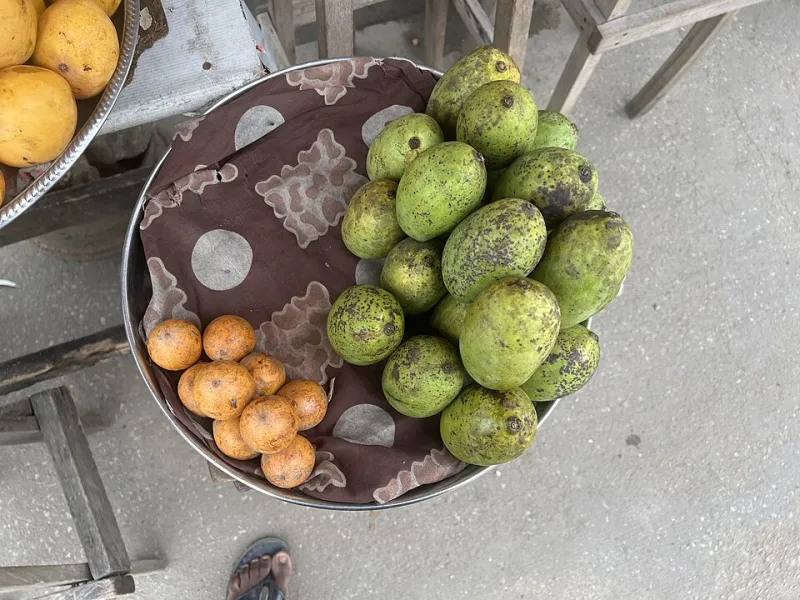
Photo: Nubelbariloe, CC BY 4.0, via Wikimedia Commons
The Neighbor With the Weird Tree
If you've ever driven through a neighborhood in Homestead, Florida or wandered through a backyard in San Diego's warmer pockets, you've probably spotted one without knowing it — a lush, broad-leafed tree dropping glossy purple or green orbs that nobody on the block quite knows what to call. That's caimito. Star apple. And the person tending it probably didn't do much more than plant it, water it occasionally, and stay out of its way.
This is the quiet paradox at the heart of caimito cultivation in the United States: the fruit thrives when left alone in the right climate, yet it stubbornly resists the kind of large-scale, systematized production that would actually get it into grocery stores. Home growers love it. Commercial farmers? They're frustrated by it.
So what exactly is going on here?
Why Backyard Caimito Just Works
Talk to anyone who's grown a star apple tree in their yard and you'll hear a similar story. Plant it in well-draining soil, give it full sun, make sure it's in a frost-free zone — and the tree kind of handles itself. Caimito (Chrysophyllum cainito) is native to the Caribbean and Central America, which means USDA hardiness zones 10 and 11 are basically its happy place. South Florida, Hawaii, and parts of coastal Southern California fit that profile.
"I planted mine about eight years ago and I've done almost nothing to it," says Marcus D., a home gardener in Cutler Bay, Florida. "Every year I get more fruit than I know what to do with. My neighbors started asking for some, then their neighbors. Now I'm basically the star apple guy on the street."
That kind of low-input success is common. In a backyard setting, a single tree can produce abundantly without the grower needing to think too hard about pest pressure, soil amendments, or irrigation infrastructure. The tree's natural resilience — which evolved over centuries in tropical environments — does a lot of the heavy lifting.
This is also partly why caimito has spread organically through Caribbean-American communities in cities like Miami, Tampa, and Los Angeles. People brought seeds and cuttings from their home countries, planted them in accommodating climates, and kept the tradition alive without any commercial infrastructure at all.
Where Commercial Farming Hits a Wall
Scale that same scenario up to a 50-acre operation and things fall apart fast. Agricultural economist Dr. Priya Nair, who has studied specialty tropical fruit viability in the Southeastern US, puts it plainly: "Caimito has almost none of the commercial infrastructure that mainstream crops take for granted. No established pest management protocols, no standardized harvest timing guides, no post-harvest cold chain built around it. You're essentially pioneering everything from scratch."
That pioneering cost is enormous. Let's break down some of the specific friction points:
Irregular fruiting cycles. Unlike mangoes or avocados — which have been selectively bred and grafted for decades to produce more predictably — caimito trees are notoriously inconsistent at commercial scale. Yield can vary wildly year to year, making it nearly impossible to sign supply contracts with distributors.
Pest and disease vulnerability at density. In a backyard, one tree has space, airflow, and a relatively low pest load. Pack hundreds of trees together and you create conditions where fungal issues and insect pressure compound quickly. There are no widely approved, commercially available spray programs tailored specifically to caimito in the US.
Harvest logistics. Star apples don't ripen uniformly on the tree, and they bruise easily. Hand-harvesting is essentially the only viable method, which makes labor costs prohibitive at scale. There's no caimito equivalent of the mechanical blueberry harvester.
Market uncertainty. Even if a commercial grower solves all the above, they still face a distribution problem. Most mainstream grocery buyers don't know how to price caimito, how to explain it to shoppers, or what shelf life to expect. Without an established retail lane, commercial farmers can't confidently predict where their harvest will actually go.
The Structural Gap Nobody's Filling
What's missing, according to Nair and several small-scale growers interviewed for this piece, is a coordinating layer — the kind of agricultural extension support, university research investment, and industry association backing that helped crops like blueberries and strawberries become the commercial powerhouses they are today.
"Blueberries had decades of USDA research behind them," Nair notes. "Caimito has almost none of that in a US context. There's good research out of Puerto Rico and some Caribbean institutions, but it hasn't been translated into practical guides for mainland commercial growers."
Small farms trying to bridge the gap are largely doing it alone. Javier Rios, who runs a three-acre specialty fruit operation in Redlands, California, has been experimenting with caimito for five years. "I've figured out a lot through trial and error, but I've also lost crops figuring it out. There's no one to call. No extension agent who knows this fruit. You're on your own."
Rios sells directly at farmers markets and through a small CSA box program, which is probably the most commercially viable model for caimito right now — hyper-local, direct-to-consumer, no cold chain required. But it doesn't scale.
What Could Actually Change Things
The path forward isn't impossible, but it requires investment in a few key areas.
First, varietal development and grafting standardization. Improved cultivars that fruit more consistently and resist common fungal issues would dramatically change the commercial math. Some of this work is happening in Hawaii and Puerto Rico, but it needs more funding and faster dissemination to mainland growers.
Second, post-harvest research. Understanding how to extend caimito's shelf life — which is notoriously short — would open up distribution channels that are currently closed. Even a few extra days of viability could make the difference between a farmers market fruit and a regional grocery store fruit.
Third, consumer education at scale. This is where websites like ours come in. The more American consumers know what caimito is, how to eat it, and why they should want it, the more pull there is from the retail side. Demand creates market incentive. Market incentive funds research. Research solves production problems.
The Backyard Still Leads
For now, the most reliable caimito supply in the United States is still growing in someone's backyard. That's not a failure — it's actually kind of beautiful. This fruit traveled from the Caribbean in the hands of families who wanted a taste of home, and it took root in American soil without any commercial help at all.
The challenge is building a bridge between that grassroots resilience and the infrastructure needed to bring caimito to people who don't happen to have a neighbor with a weird tree out back. It's a solvable problem. It just needs more people paying attention to it.