Caimito vs. Mango, Guava, and Passion Fruit: Which Tropical Fruit Actually Wins on Nutrition?
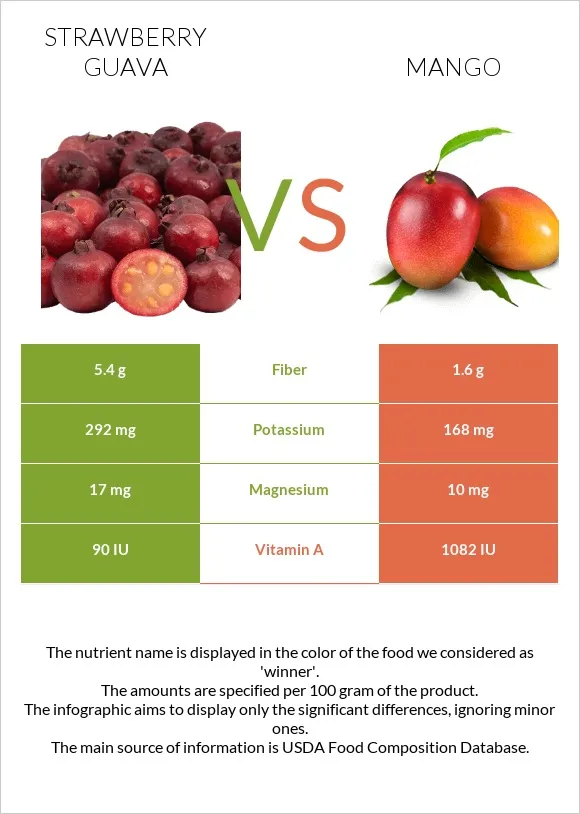
Photo: tropical fruits nutritional comparison star apple mango guava fresh cut, via foodstruct.com
The Tropical Fruit Aisle Has a Blind Spot
Walk into any Whole Foods or Trader Joe's and you'll find mango in about fifteen different forms — fresh, frozen, dried, juiced, and somehow also in a salsa. Guava paste shows up in the cheese section. Passion fruit flavors everything from kombucha to yogurt. These fruits have done their marketing homework.
And then there's caimito — star apple — sitting quietly in the corner of Caribbean and Asian grocery stores, largely unknown to the average American health-conscious shopper. That's a shame, because when you actually line up the nutritional data, caimito holds its own against the tropical fruit celebrities in some pretty meaningful ways.
We talked to registered dietitians and dug into the available research to give you an honest, no-hype comparison.
What's Actually in a Star Apple?
Before getting into comparisons, it helps to know what you're working with. A 100-gram serving of fresh caimito (roughly a few good spoonfuls of the creamy flesh) delivers approximately:
- 67–70 calories — modest and in line with other fresh fruits
- 14–15 grams of carbohydrates, primarily natural sugars
- Around 3 grams of dietary fiber
- Vitamin C — estimates vary by variety and ripeness, but meaningful amounts are present
- Calcium — notably higher than most tropical fruits
- Small but present amounts of iron, phosphorus, and B vitamins
The exact numbers shift depending on whether you're eating the purple-skinned or green-skinned variety, how ripe the fruit is, and where it was grown. That variability is true of virtually every fresh fruit, so don't let it throw you.
"What stands out about caimito from a dietitian's perspective is the calcium content," said one registered dietitian based in Miami who works with Caribbean-American communities. "Most people don't associate fruit with calcium. But caimito has more than you'd find in mango or papaya, which makes it interesting for clients who are dairy-free or just trying to diversify their mineral sources."
Head-to-Head: Caimito vs. Mango
Mango is the undisputed king of tropical fruit in the American market, and nutritionally it's genuinely solid. A 100-gram serving of fresh mango offers around 60 calories, about 15 grams of carbs, 1.6 grams of fiber, and a strong hit of vitamin C and vitamin A (in the form of beta-carotene).
Where does caimito compete? Fiber is comparable, calories are similar, and the calcium advantage we mentioned is real. Where mango wins is on vitamin A — the beta-carotene content in ripe mango is hard to beat across the fruit kingdom, and that's worth acknowledging.
But here's the thing: most Americans already eat mango. Adding caimito to your rotation isn't about replacing mango — it's about nutritional diversity. Different fruits deliver different phytonutrients, antioxidants, and polyphenols, and the research consistently supports eating a wide variety of fruit rather than loading up on one.
Head-to-Head: Caimito vs. Guava
Guava is the nutritional overachiever of the tropical world. Per 100 grams, it packs roughly 4 grams of fiber and an almost absurd amount of vitamin C — sometimes over 200mg, which is more than double the daily recommended intake in a single serving. If you're purely optimizing for vitamin C, guava wins, full stop.
Caimito doesn't match those numbers, and we're not going to pretend otherwise. But a few things are worth noting. First, most Americans consume guava in processed forms — paste, juice, nectar — where much of that vitamin C has already degraded. Fresh guava is fantastic; guava candy is a different story.
Second, caimito contains compounds that guava doesn't, including certain tannins and antioxidants that have drawn interest in preliminary research on blood sugar regulation. It's early-stage science, so we won't overclaim, but the bioactive profile of caimito is more complex than its modest nutrition label might suggest.
Head-to-Head: Caimito vs. Passion Fruit
Passion fruit is having a serious moment in American wellness culture, and for good reason. It's high in fiber (about 10 grams per 100g of pulp), rich in antioxidants, and has a glycemic index that's relatively low for a sweet fruit.
The catch? That 100-gram serving of passion fruit pulp is mostly seeds and juice — you'd need a lot of the fruit to get those numbers, and passion fruit is typically consumed in small amounts as a flavoring agent rather than a standalone snack.
Caimito, by contrast, is a sit-down-and-eat-it fruit. The flesh is creamy, filling, and satisfying in a way that makes it easy to consume a meaningful serving. From a practical dietary standpoint, a fruit you'll actually eat regularly beats a superfood you use as a garnish.
Debunking the "Exotic Fruit = Superfood" Myth
Here's something worth saying plainly: no single fruit is going to transform your health. The "superfood" framing that dominates wellness marketing sets up unrealistic expectations and often leads people to pay premium prices for supplements and powders derived from fruits they could just eat fresh.
Caimito doesn't need a superfood label. It's a nutritious, whole fruit with a distinctive flavor profile, some interesting bioactive compounds, and a place in a balanced diet. That's genuinely enough.
"I always tell my clients to be skeptical of extreme claims in either direction," said a second dietitian we consulted, who practices in the New York metro area. "Caimito isn't going to cure anything. But it's real food, it's delicious, and it brings nutrients and variety that a lot of American diets are missing. That's a meaningful benefit."
How to Actually Add Star Apple to Your Routine
If you're sold on giving caimito a regular spot in your fruit rotation, here's the practical part:
- Eat it fresh and ripe. Like most fruit, this is when the nutritional value is highest and the flavor is best. Look for fruit that yields slightly to gentle pressure.
- Add it to smoothies. The creamy texture blends beautifully and pairs well with citrus or ginger.
- Use it in fruit salads. The mild sweetness and soft texture contrast nicely with more acidic fruits like pineapple or kiwi.
- Try it as a yogurt topper. Especially for dairy-free yogurts, the calcium in caimito is a nice nutritional bonus.
- Don't cook it. Heat degrades both flavor and heat-sensitive nutrients. Caimito is a raw fruit through and through.
The bottom line is simple: star apple deserves a spot in your kitchen not because it's the single most nutritious fruit on the planet, but because it's genuinely good for you, genuinely delicious, and genuinely underrepresented on American tables. That combination is reason enough.