What's Actually in That Bag: A No-Nonsense Guide to Buying Frozen Caimito Pulp

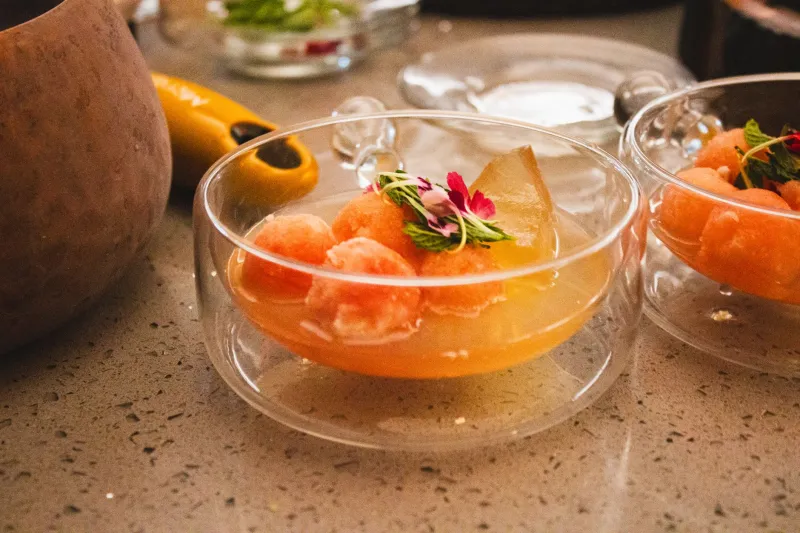
Photo: frozen tropical fruit pulp in clear packaging on kitchen counter, via worldtraveledfamily.com
Fresh caimito is a scheduling problem. The season is short, the fruit bruises if you look at it wrong, and by the time a case lands in a US city it has usually spent more time in transit than it will spend in your kitchen. Frozen pulp sidesteps most of that. It's shelf-stable for months, it doesn't care about your Tuesday, and it lets you cook with star apple in February.
The catch is that a frozen pulp bag is a black box. Two bags can look identical and hold wildly different things. So here's the practical version of what to look for, how to thaw it, and what to do with it once it's open.
Start with the ingredient list, not the front of the bag
Flip the bag over. If the ingredient list says star apple and nothing else, that's your baseline. Everything else on the package — the palm trees, the word 'authentic,' the swoosh of sunrise — is decoration.
Single-ingredient pulp is what you want for savory cooking, cocktails, and anything where you're controlling the sweetness yourself. Blended pulp with sugar, water, or citric acid isn't automatically bad, but it's a different product. You're paying for water weight and you've lost the ability to season the dish your way.
One more label habit: check whether the bag says 'pulp' or 'juice' or 'nectar.' Pulp means flesh, and flesh is where the flavor and body live. Nectar is a drink. They behave completely differently in a saucepan.
Added sugar, fillers, and the water trick
A few things show up in frozen tropical fruit more often than anyone would like:
- Sugar or cane syrup. Common in fruit destined for smoothie programs. Fine if you know, annoying if you don't.
- Water. Reads as 'pulp' on the front, 'pulp and water' on the back. You're buying less fruit per pound.
- Other fruit. Sometimes star apple gets cut with apple, pear, or white grape for cost and consistency. Legally it should be declared, and it usually is — in small print.
- Preservatives. Ascorbic acid is common and mostly harmless; it's there to slow browning. A long list of stabilizers and gums is a sign the product was built for industrial blending, not for your kitchen.
Compare price per pound of actual fruit, not price per bag. A 14-ounce bag at $9 with nothing added can be cheaper than a 20-ounce bag at $8 that's half water.
Country of origin actually changes the flavor
Star apple isn't one flavor. Fruit grown in different places lands differently — sweeter and denser in some regions, lighter and more floral in others, sometimes faintly resinous. Frozen pulp from Vietnam, Thailand, Colombia, the Dominican Republic, or Puerto Rico will not taste identical, and that's not a defect.
For most home cooks the practical advice is simple: buy one bag, taste it plain, and calibrate from there. If it's intensely sweet, plan on cutting it with lime or yogurt. If it's mild, it'll need help from vanilla, spice, or a stronger fruit. Write a note on the bag so you remember which brand did what.
Thawing: slow, cold, and in the bag
This is where most bags get ruined. Star apple pulp has a delicate texture, and heat destroys it fast.
Do this: move the bag to the refrigerator the night before. Put it in a bowl in case of leaks. Give it 8 to 12 hours. If you're in a hurry, submerge the sealed bag in cool — not warm — water and change the water every 20 minutes.
Don't do this: microwave it, run it under hot tap water, or leave it on the counter all afternoon. All three push the pulp past the point where it holds together, and you end up with a thin, grainy liquid that separates the moment it sits.
Also: don't refreeze. Thawed pulp will keep in the fridge for a few days in a sealed container, but the texture degrades each time it cycles. If a recipe only needs half a bag, portion the rest into ice cube trays while it's still frozen solid — a chopstick or a heavy knife will break the block apart.
What to check before and after you open it
Before opening: the bag should be solid, with no soft spots, no frost fur inside, and no staining on the packaging. Freezer burn shows up as pale, dry, leathery patches on the surface of the block.
After opening: the color should be creamy white to pale lavender. Star apple pulp darkens on contact with air, so a little browning at the edges isn't a scandal. A uniformly gray or sour-smelling bag is. Taste a small spoonful — it should be sweet, mild, and clean, with a faint note some people describe as grape and others as lychee's quieter cousin.
If it smells fermented or tastes sharp, stop there. No amount of sugar fixes that.
Beyond sorbet: where frozen pulp actually earns its keep
Sorbet is the obvious move, and it works. But the bag does more than dessert:
- Pan sauces. Reduce pulp with stock, ginger, and a splash of vinegar; finish with butter and spoon it over pork chops or duck. The fruit's mild sweetness takes to savory food better than most people expect.
- Smoothies and lassi. Blend with yogurt, a squeeze of lime, and a pinch of salt. The pulp brings body that juice can't.
- Cheesecake and panna cotta. Fold strained pulp into the base; the flavor stays delicate, so don't bury it under too much sugar.
- Marinades. Star apple plus soy, garlic, and lime is a solid tropical braise for chicken thighs.
- Jam and curd. Pulp cooked down with a little sugar and acid sets into a soft, honeyed jam that's excellent on biscuits.
The bottom line
Frozen caimito pulp is a good deal when you buy the plain version, thaw it cold, and taste before you commit it to a recipe. It's a bad deal when it's stretched with water and sugar and treated like a smoothie base. Read the back of the bag, buy the boring one, and keep a lime nearby.